Vario

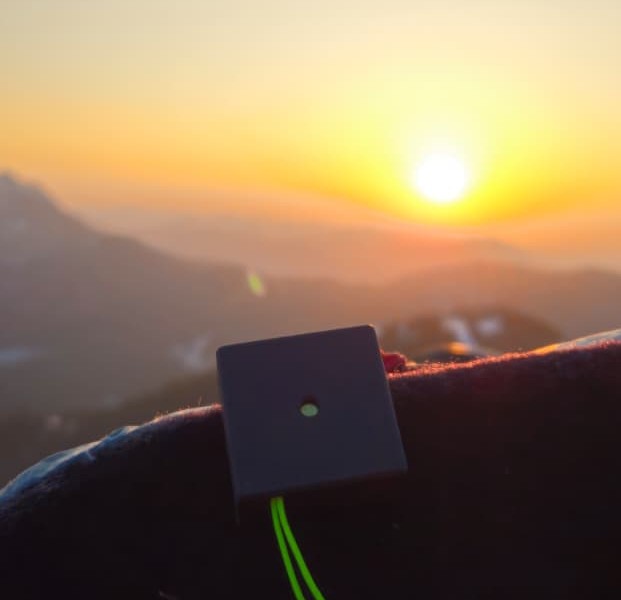
The variometer for paraglider pilots.

Software

For the software, I aim for the most robust, low-noise evaluation of the sensor data possible. At the core is a Kalman filter that fuses all 10 sensor readings and calculates a precise vario tone. On top of that, there is an efficient interrupt-controlled sampling routine and a modular code structure so that future extensions such as GPS logging, FLARM, or a display can be integrated without any problems.

For easy configuration, all settings can be adjusted using the LiftAir app.

  • Firmware updates
  • Customize the sound profile
  • Change the Bluetooth protocol
  • Calibration
  • and much more.

Hardware

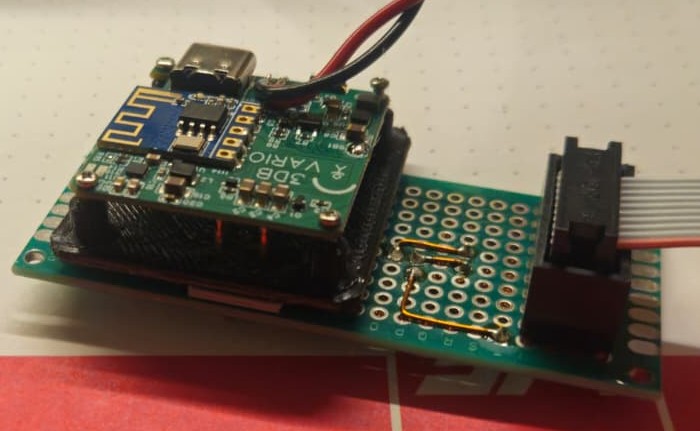
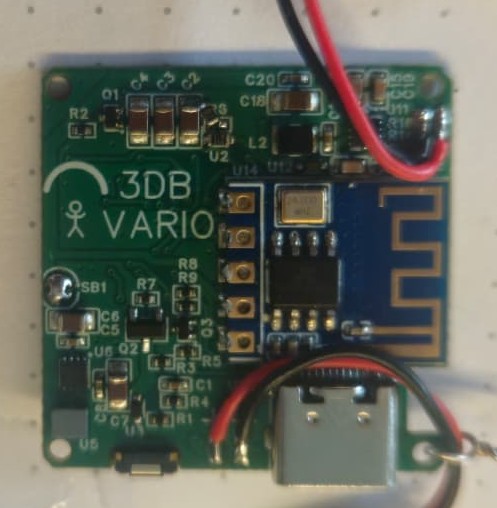
At the heart of the hardware are a highly precise barometric pressure sensor, accelerometer, tilt sensor, and magnetic sensor.

A low-power microcontroller handles the sensor fusion calculations.

In addition, there is a Bluetooth module, GPS receiver, solar, and a battery for long runtime.

The speaker is a piezo buzzer: small, compact, and loud. Intuitive control with just one button.

If the battery still runs out, it can be fully recharged via USB-C in just 30 minutes.

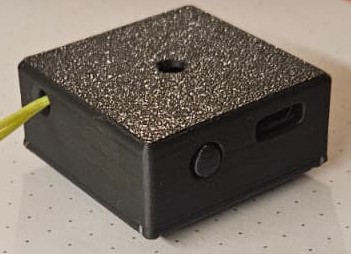
Housing

The housing is incredibly important for good sound.

To keep costs low and remain as flexible as possible, I decided to manufacture the housings with a 3D printer.

ASA-CF should withstand all outdoor conditions.

Later, I would like to switch to injection molding or even machine them from ALU.

Technical data

Sensors

Barometer, 6-axis IMU, 3-axis magnetometer

Resolution

±0,1 m/s

Microcontroller

32bit, Cortex M4, 80MHz

Connectivity

USB-C, Bluetooth Classic, Bluetooth Low Energy

Battery

LiPo, approx. 20h runtime

Housing

3D printing (ASA-CF)

Weight

Approx. XX g

Dimensions

32 × 32 × 17mm